
The Real Cost of a Landscape Project in Massachusetts
It is one of the first questions prospective clients ask — and one of the hardest to answer honestly without knowing the property.
The straightforward answer is that every Ivy Studio project is different, shaped by the land, the people who will live in it, and what they hope it makes possible. What matters more than any single number is understanding what drives the investment, what you are actually paying for, and why the design-build model changes the equation entirely.
This article is an attempt to answer that question the way we would answer it in person: directly, without hedging, and with enough detail to help you decide whether a conversation makes sense.
WHY LANDSCAPE PROJECTS ARE DIFFICULT TO PRICE IN THE ABSTRACT
A building architect cannot price a custom home before understanding the site completely — how the owners want to live, what the land will support, how the spaces relate to one another, and what level of craftsmanship the project demands. Every decision connects to the next.
Landscape architecture works exactly the same way. The land determines the work, and the work determines the cost.
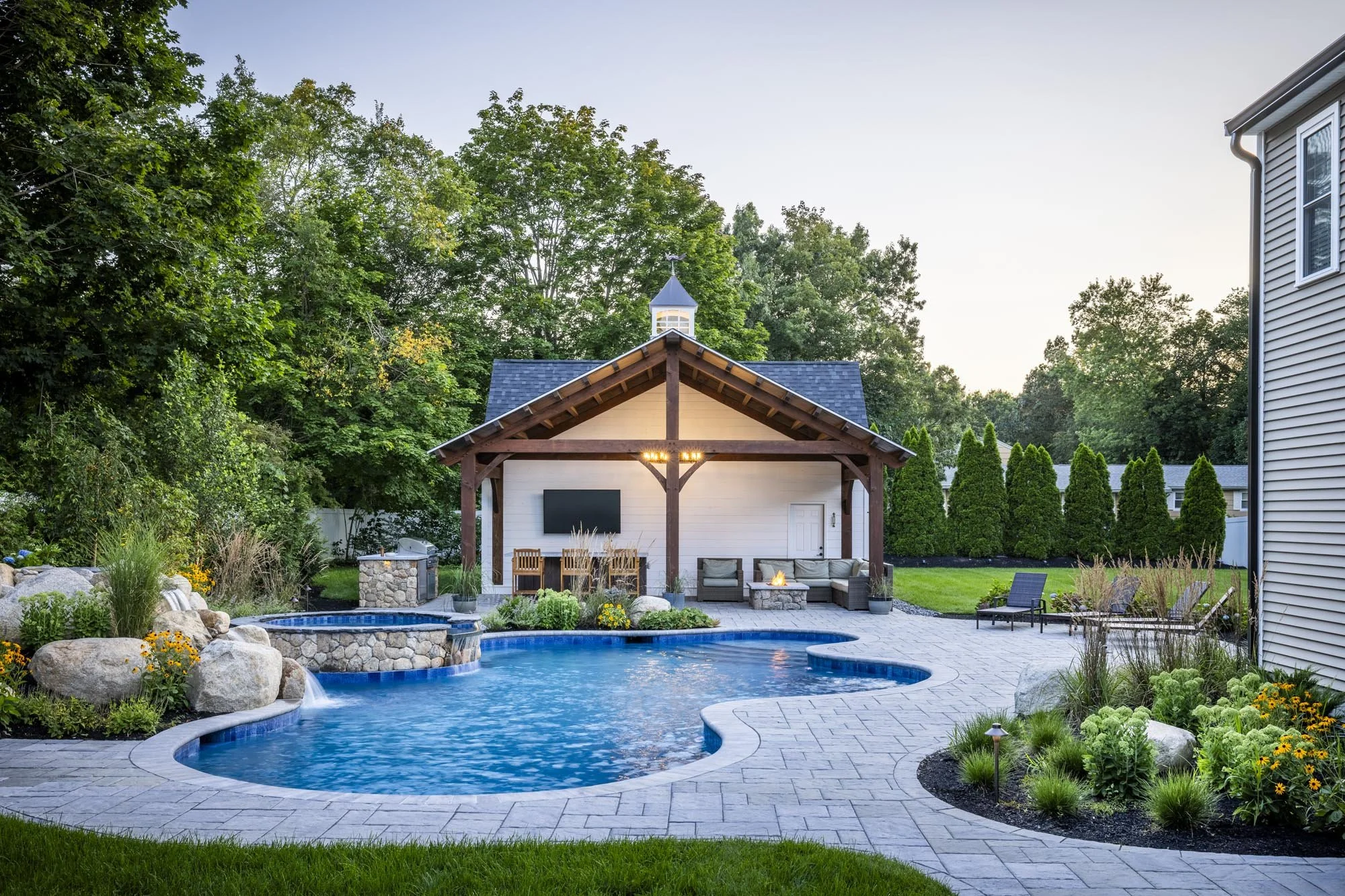
Every property is different. A flat half-acre lot in Wellesley and a ledge-covered coastal property in Cohasset present entirely different design and construction challenges — even if both clients want a pool, a terrace, and an outdoor kitchen.
The variables that drive cost are numerous: the topography of the land, the relationship between the home's architecture and the outdoor environment, the complexity of the program, the materials selected, and the site conditions that only become apparent once work begins.
This is why any studio that gives you a firm number before walking your property is giving you a guess. It may be a well-intentioned guess, but it is a guess nonetheless. For that reason, we do not publish fixed package pricing. The right investment can only be understood once we have seen the land and understood how you want to live in it.
What we can do is explain what drives the investment — so that when a number is given, you understand what it reflects.
WHAT YOU ARE ACTUALLY PAYING FOR
Design — The Thinking Before the Building. In a conventional landscape project, design and construction are separate engagements. A designer produces a plan. A contractor bids on it. The work is interpreted along the way. Something is often lost in translation.
At Ivy Studio, design and construction are carried by the same studio. The design phase includes a comprehensive master plan for the entire property — not as separate elements, but as one cohesive outdoor living environment. It includes The Reveal: a fully immersive 3D visualisation of your landscape before a single stone is placed. Decisions that would otherwise be made mid-construction — at full cost and with limited options — are made here, where they cost nothing to change.
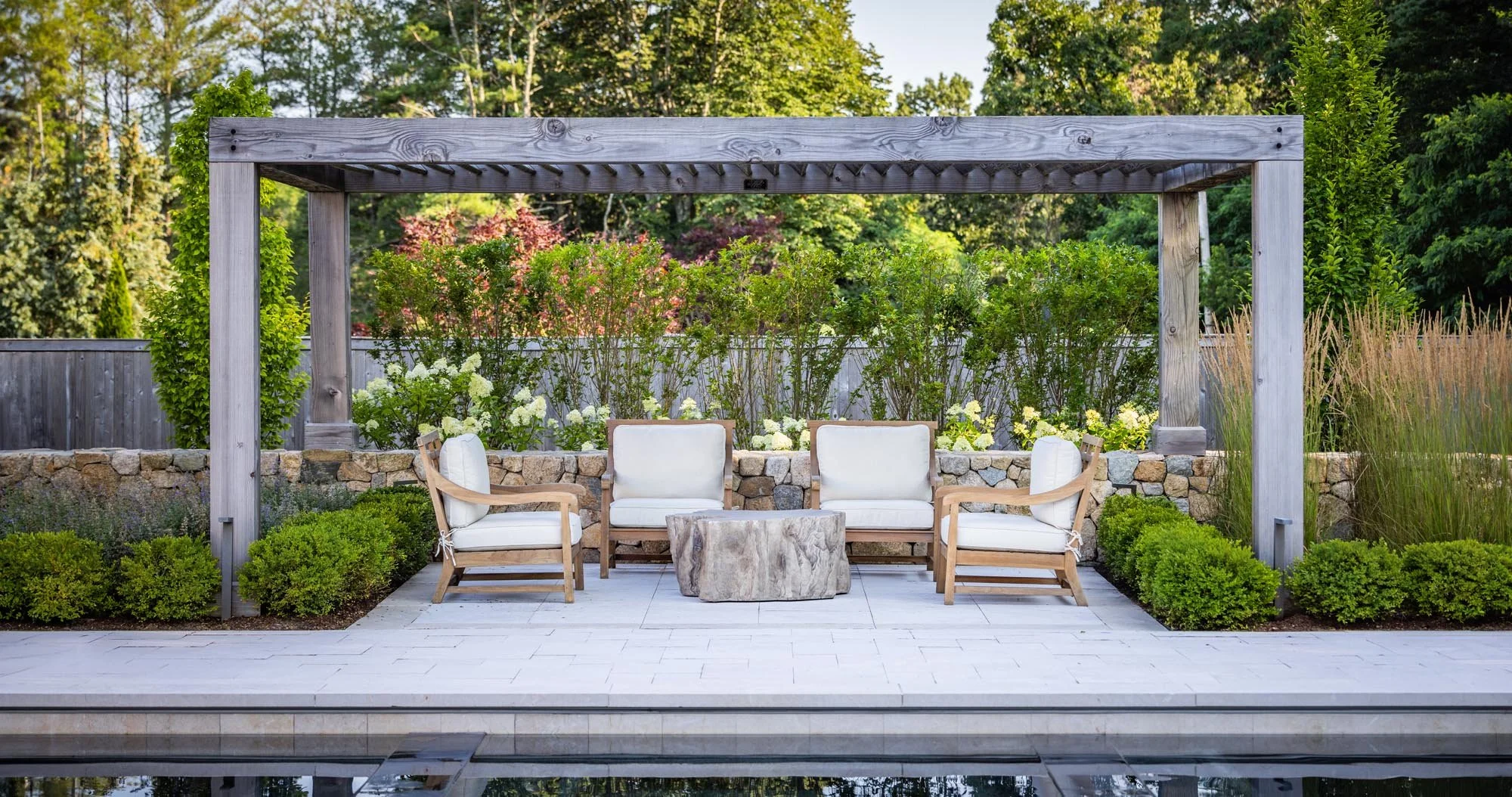
Materials — What Lasts and What Does Not. The difference between a terrace that looks impressive on installation day and one that looks better in twenty years comes down to material quality and how those materials are used. We do not select materials for how they photograph at completion. We select them for how they perform over time — because that is what protects the investment and what determines whether the landscape holds its value as a property asset.
Construction — Execution at the Level the Design Demands. At Ivy Studio, the team that developed the design oversees its construction. When decisions arise mid-construction — and they always do — they are made by someone who understands the whole, not just the immediate problem. This continuity has a cost. It is also what separates a finished environment from an assembled one.
WHAT DRIVES THE INVESTMENT UP OR DOWN
Understanding the variables that affect cost helps set realistic expectations before a site visit.
Site conditions are among the most significant variables. A property with significant grade change, exposed ledge, poor drainage, or limited access will require more preparation before any designed element can be introduced. These are not surprises on a well-run project — they are understood early and factored into the plan.
Program complexity reflects how much is being designed and built. A full outdoor environment with a pool, outdoor kitchen, wellness space, terracing, and lighting represents a more complex undertaking than a single primary element. The investment reflects the scope.
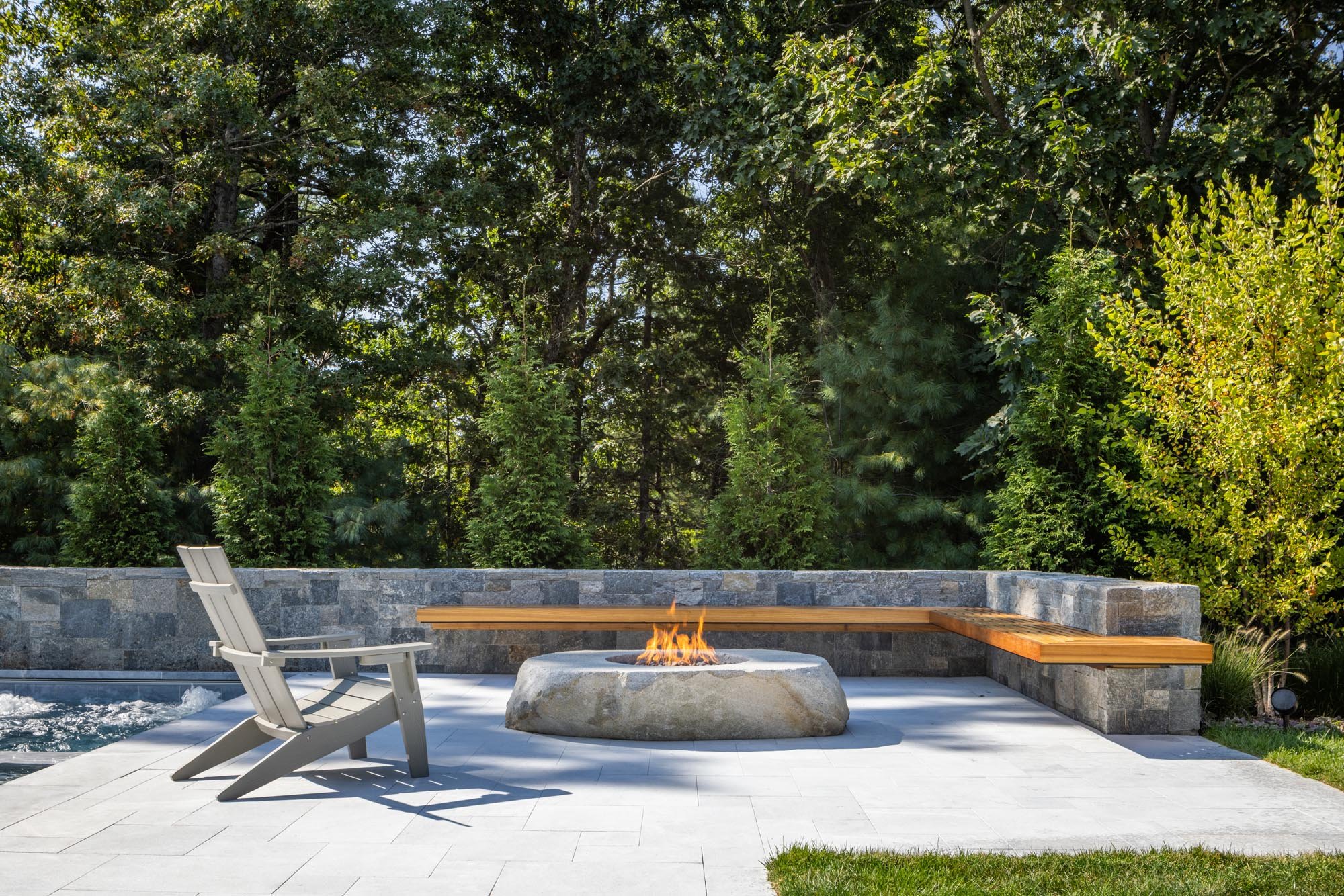
Material specification has a direct relationship to cost. A terrace in cut bluestone and one in poured concrete are not the same investment — and they are not the same result. The materials we specify are selected for longevity and long-term performance. They carry a higher upfront cost and a lower long-term one.
Site access and logistics affect construction in ways that are not always visible in a design. Properties with restricted access, proximity to wetlands or conservation land, or complex permitting requirements require additional planning and time.
THE DESIGN-BUILD DIFFERENCE — WHY IT CHANGES THE COST CONVERSATION
Most clients approaching a significant landscape investment have encountered the conventional model: hire a designer, receive a plan, go to bid, select a contractor, hope it gets built as intended.
The problems with this model are well documented. Designs get value-engineered during the bid process. Contractors make field decisions that alter the design intent. The client ends up absorbing the gap between what was designed and what was built.
The design-build model eliminates this. One studio. One contract. One continuous line of accountability from the first site visit through the final day of construction. For a project of this scale, this continuity is not a luxury. It is the most reliable way to ensure that what gets built is what was designed, and that the investment holds its value.
WHAT HAPPENS NEXT
Our process starts with a question — how do you actually want to live in this space? We call it the Big Idea Session. Family structure, daily routines, the amenities that matter versus the ones that just sound good on paper. A short questionnaire shapes that conversation before we ever talk numbers.
From there, we walk the property together. That's when the real picture forms — what the land can support, what it will take to get there, and what a project like yours tends to cost.
There's no pressure and no obligation at any point. Just a clearer picture than you had before we started.