
WHAT WE SHAPE
Every element has a relationship to everything around it.
Water relates to light. Stone relates to grade. Fire relates to gathering. An outdoor kitchen relates to the way a family actually lives. Our work is in understanding those relationships — and designing so each element supports the others.
The work varies. The thinking does not.

Every element. One composition.
Most landscape companies think about outdoor spaces as a collection of elements to be installed. A pool goes here. A patio goes there. A kitchen gets added later. Each decision is made independently, and over time the property accumulates — but never quite comes together.
Ivy Studio works differently. Before any element is designed, the entire property is understood — the architecture of the home, the conditions of the land, and how life unfolds between them. Every element that follows is designed in direct response to that understanding. Water, stone, fire, wellness, gathering — each one earns its place by serving the whole.
The measure of a landscape designed this way is not how it looks on the day it is completed, but how it is used — across seasons, in daily routines, and over time.
What follows is not a list of services. It is an explanation of how we think about each element — and what it means to integrate it into something that supports how you truly live.
Each element is considered in relation to the land, the home, and how the space is lived in — not as an isolated feature.
01
Pools & Water
Water as presence.
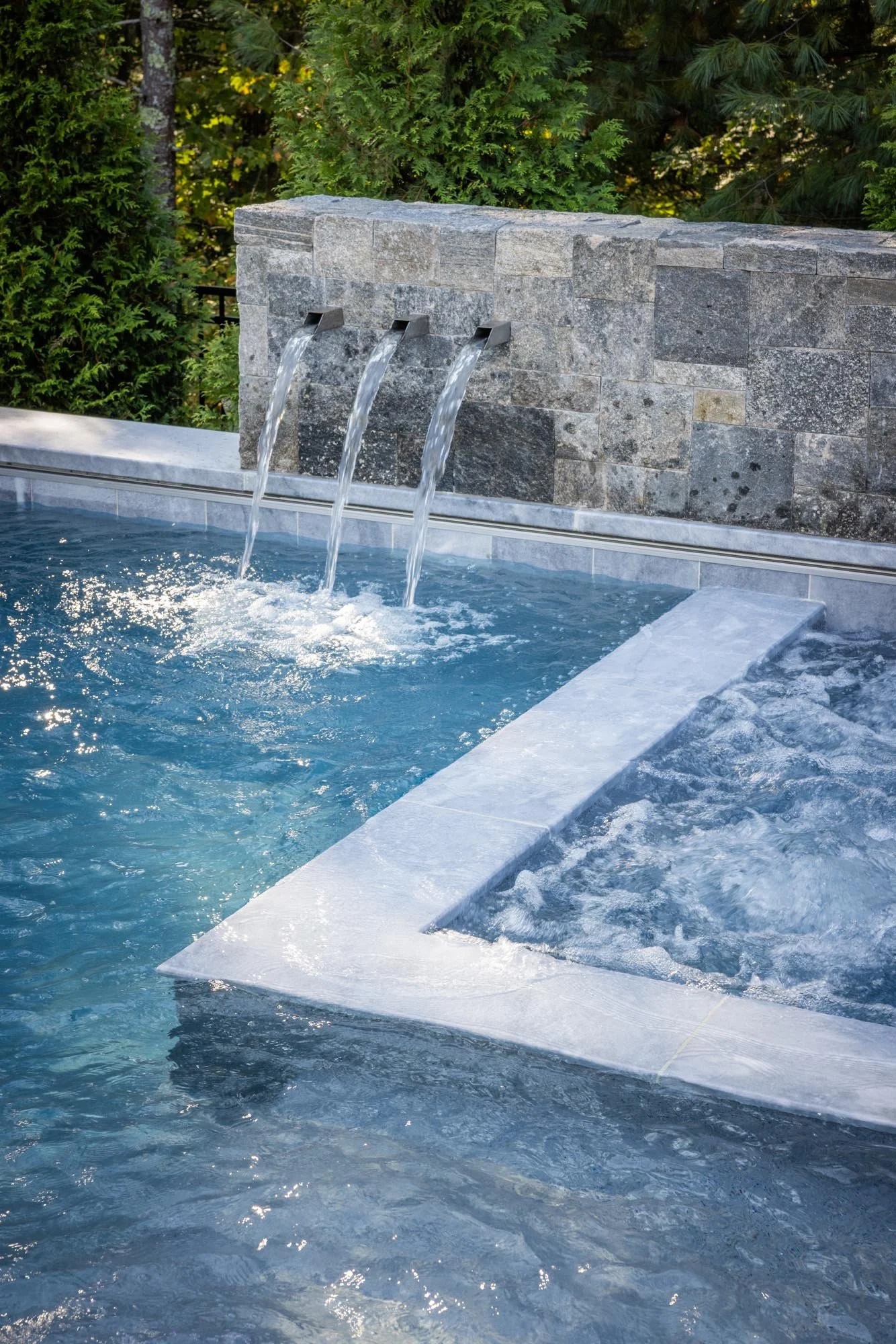
A pool designed as a standalone installation will always feel like one. It dominates the space around it and draws the eye without earning it, making every other decision feel secondary.
When water is designed as part of a complete landscape — when its position responds to grade, its edges relate to the stonework, and its surface reflects the sky at the right angle — it stops being an object and becomes something that shapes the space.
We design pools, reflecting pools, and water elements in direct relationship to everything around them. Size and shape are determined by how the water sits within the land. Materials are selected for how they transition into surrounding surfaces. Placement is guided by views from the home and the way movement flows across the property.
A pool designed this way does not compete with the landscape. It completes it.
02
Wellness — Saunas, Cold Plunges & Retreat
Wellness as routine.
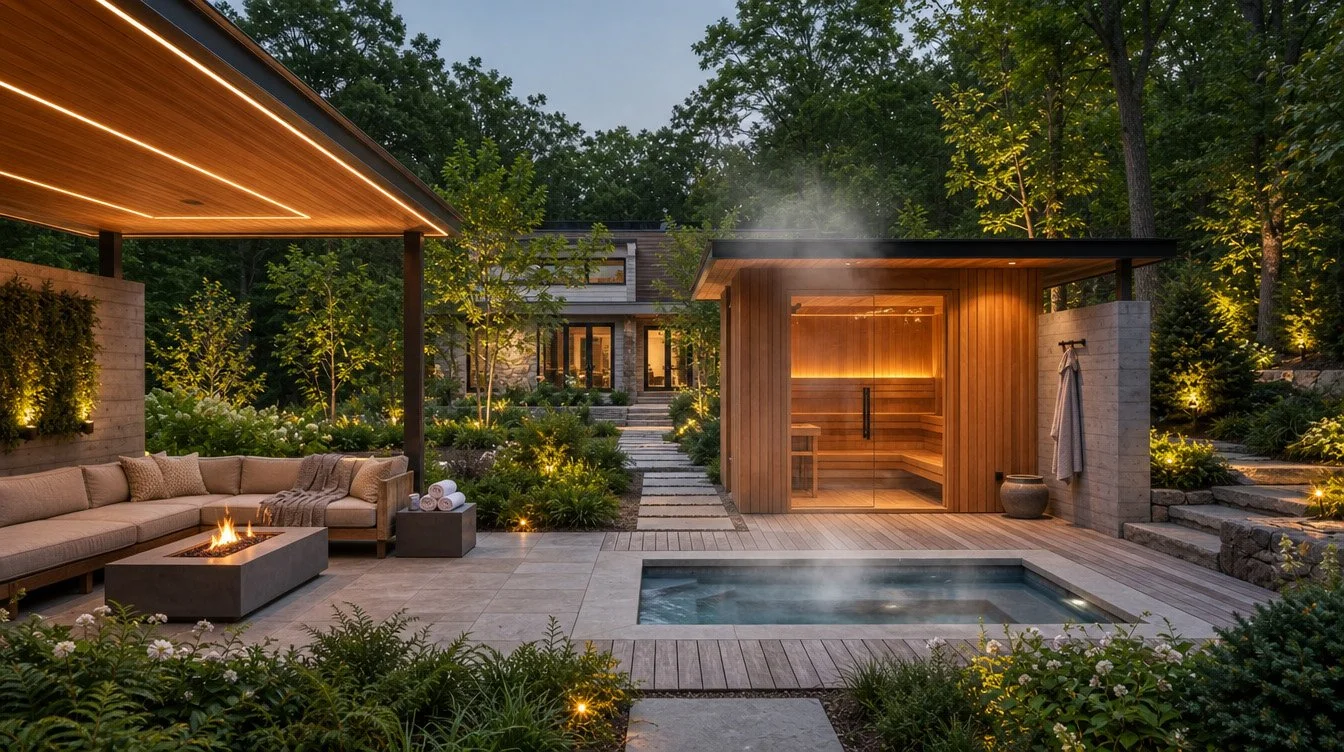
The clearest sign a landscape has been designed well is how often it is used — not occasionally, but consistently. On a Tuesday morning in March. A Thursday evening in November. A quiet Saturday in January.
Outdoor wellness makes this visible. A cold plunge used regularly in February is not incidental. It is the result of placement, proximity, privacy, and material — all considered together so the experience feels effortless to return to.
We think about saunas, cold water, and retreat spaces in relation to the landscape as a whole. The relationship between each element — and how easily they connect — determines whether the space becomes part of daily life or remains occasional.
The terrace where morning coffee happens naturally. The fire that extends an October evening. The cold plunge used in February because it was positioned and designed for exactly that.
These are the measures of a landscape that was designed around how people actually live — not around how a property photographs.
The goal is an environment that supports routine without effort.
03
Terraces & Stonework
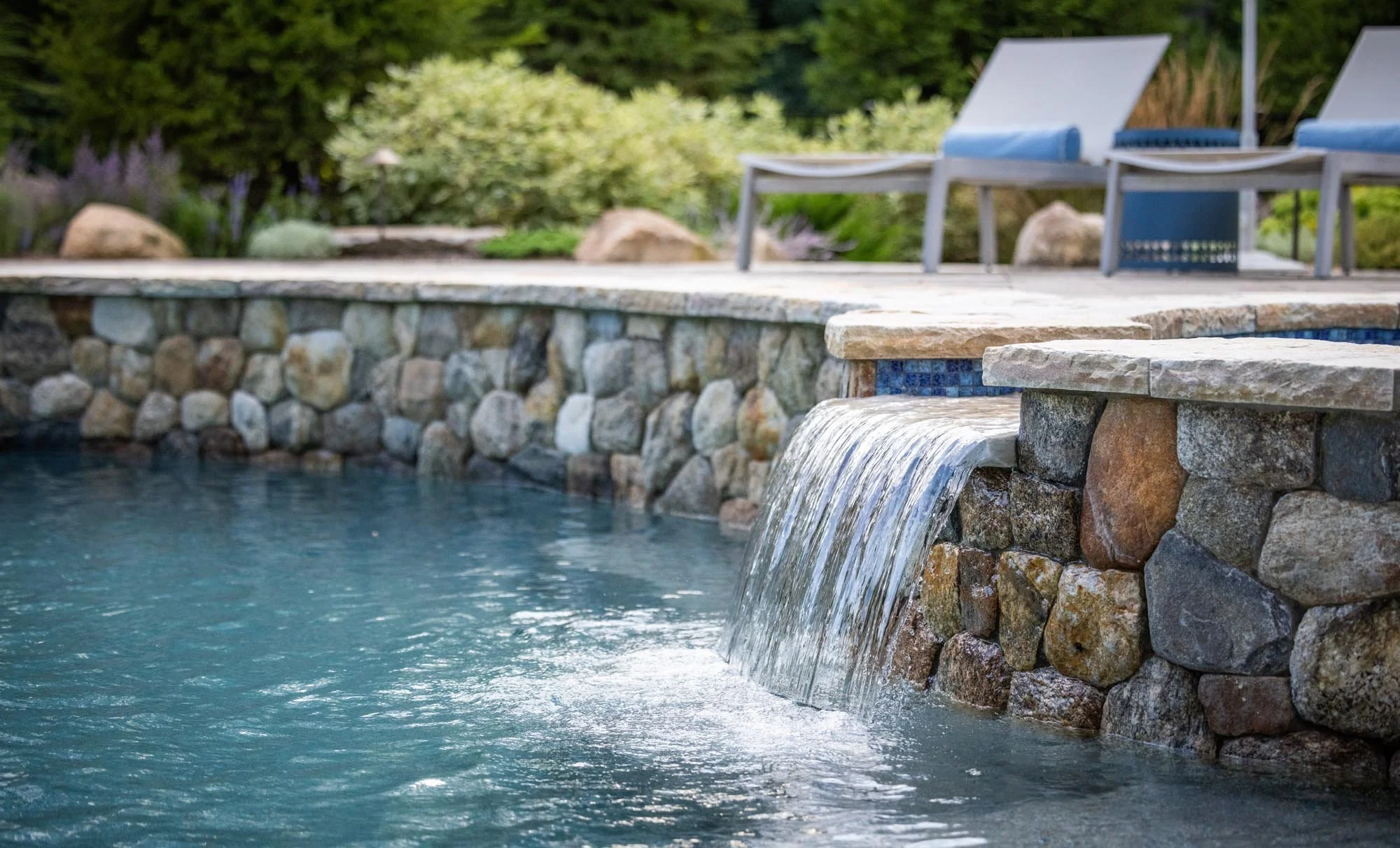
Stone as structure.
The clearest sign a landscape has been designed well is how often it is used — not occasionally, but consistently. On a Tuesday morning in March. A Thursday evening in November. A quiet Saturday in January.
Outdoor wellness makes this visible. A cold plunge used regularly in February is not incidental. It is the result of placement, proximity, privacy, and material — all considered together so the experience feels effortless to return to.
We think about saunas, cold water, and retreat spaces in relation to the landscape as a whole. The relationship between each element — and how easily they connect — determines whether the space becomes part of daily life or remains occasional.
The goal is an environment that supports routine without effort.
04
Outdoor Kitchens & Dining
Cooking as gathering.
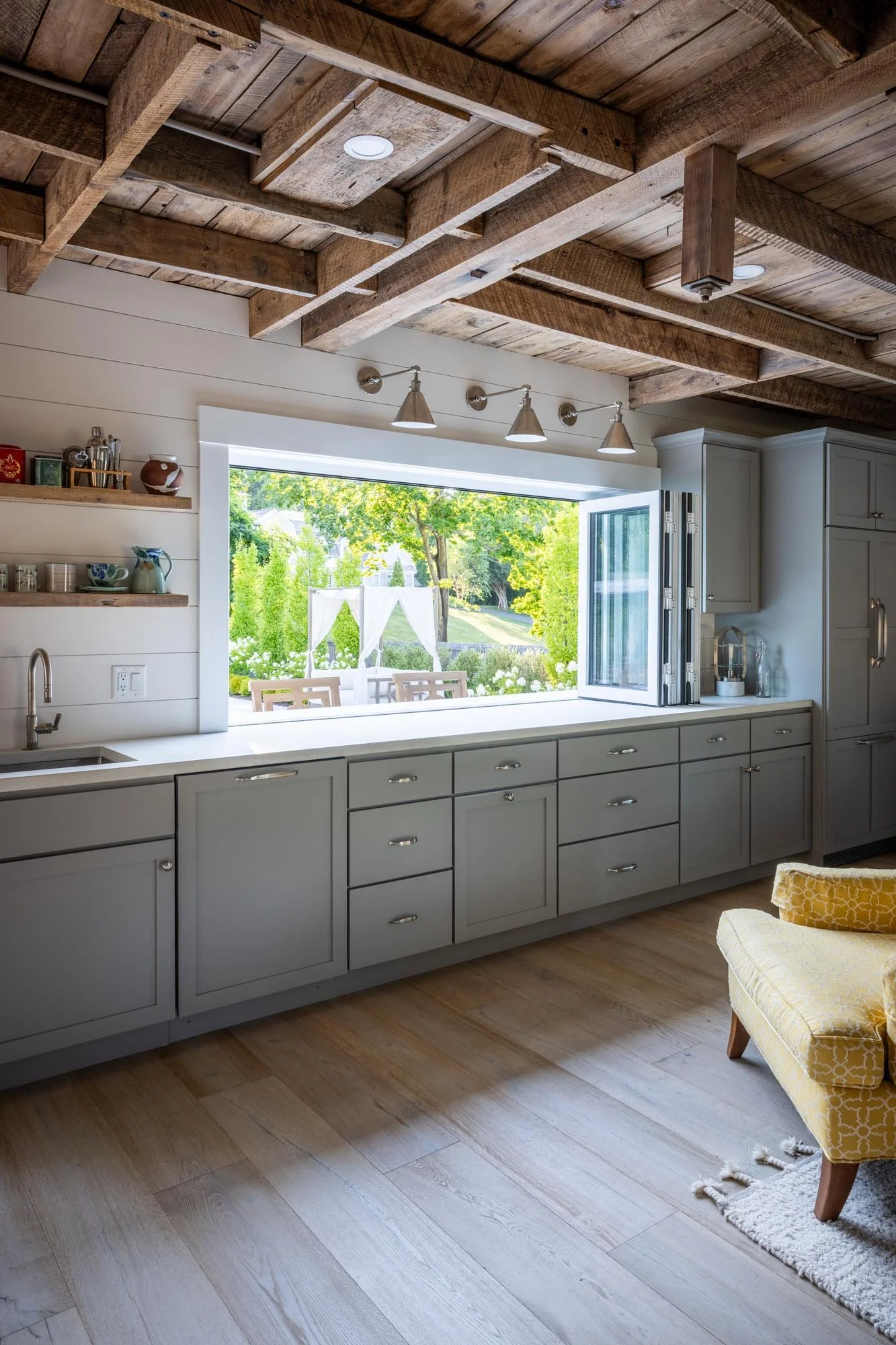
An outdoor kitchen built into a wall is fundamentally different from one placed in a yard. One feels integrated. The other feels temporary. We design toward the former.
We begin with how the space is used — where cooking happens relative to gathering, how the kitchen connects to dining, and how both relate to the surrounding landscape. Comfort, exposure, and view are considered from the outset.
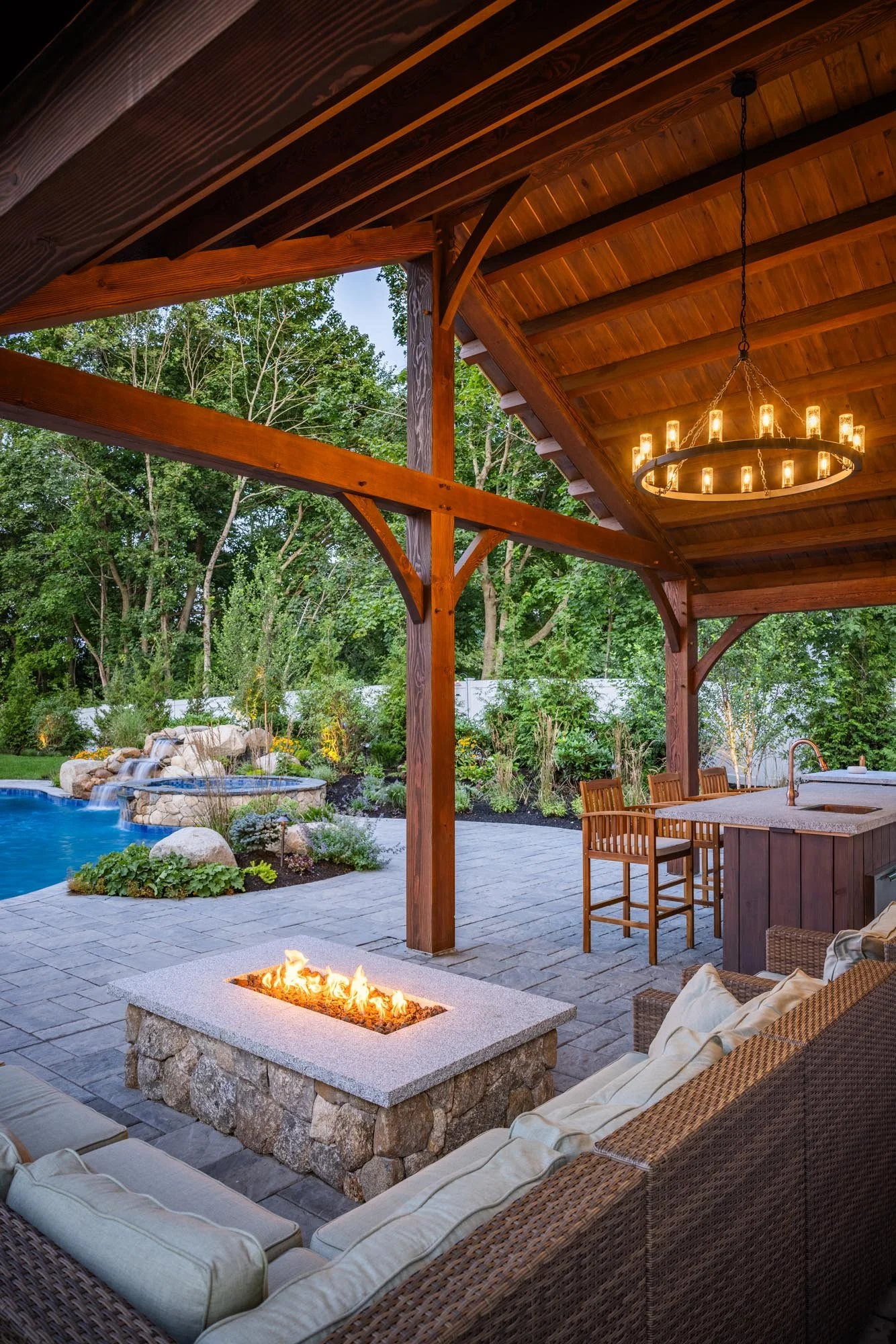
Shelter and shade are part of that relationship — whether through structure or planting — ensuring the space can be used throughout the day and across seasons.
The result is a kitchen that supports gathering naturally, without effort.
05
Entertainment, Gathering & Recreation
Gathering as instinct.
The most useful question in any landscape project is not "what do you want," but "how do you live." Where people gather. Where children move. Where the family ends up without being directed.
These patterns determine where entertainment areas, lawns, lounge spaces, and gathering structures belong — where they will actually be used.
We design with both present and future use in mind. A lawn for young children becomes space for teenagers. A seating area for two expands to hold twelve.
A landscape that is used every day is one that was designed around how life unfolds.
06
Fire & Lighting
Fire as anchor.
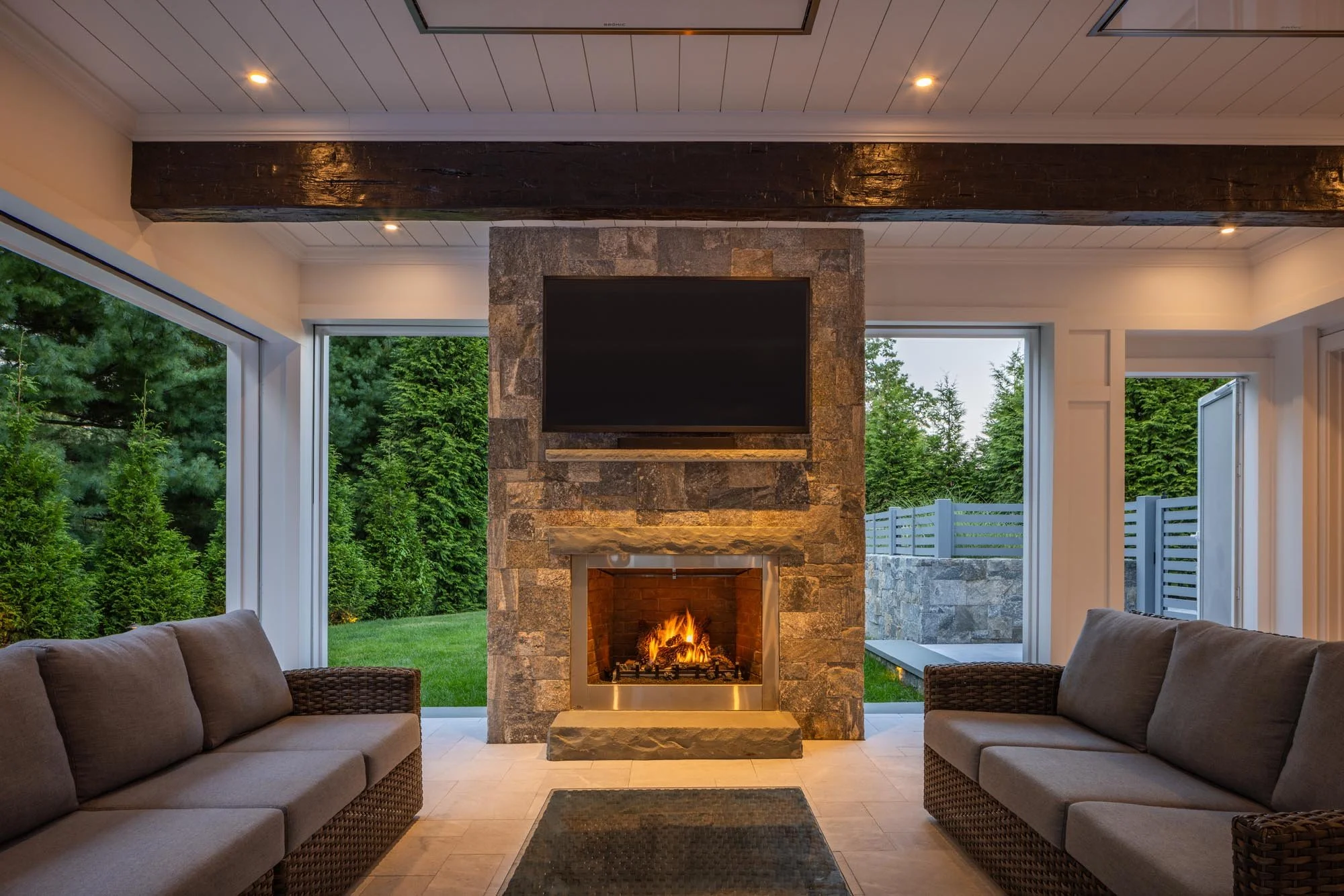
A landscape designed only for daylight is incomplete. The evening experience — how fire anchors a space, how light reveals texture, how darkness is held rather than eliminated — is equally important.
Fire creates a centre of gravity. When positioned correctly, people move toward it without being directed. They slow down. Conversations lengthen. The evening extends.
Lighting is designed to reveal rather than flood — drawing out texture, defining edges, and extending the experience into the night.
The goal is a landscape that can be experienced after dark, not simply seen.
07
Landscape Design
Landscape as whole.
Landscape design is not a category of service. It is a way of thinking — one that determines whether a property feels complete or assembled.
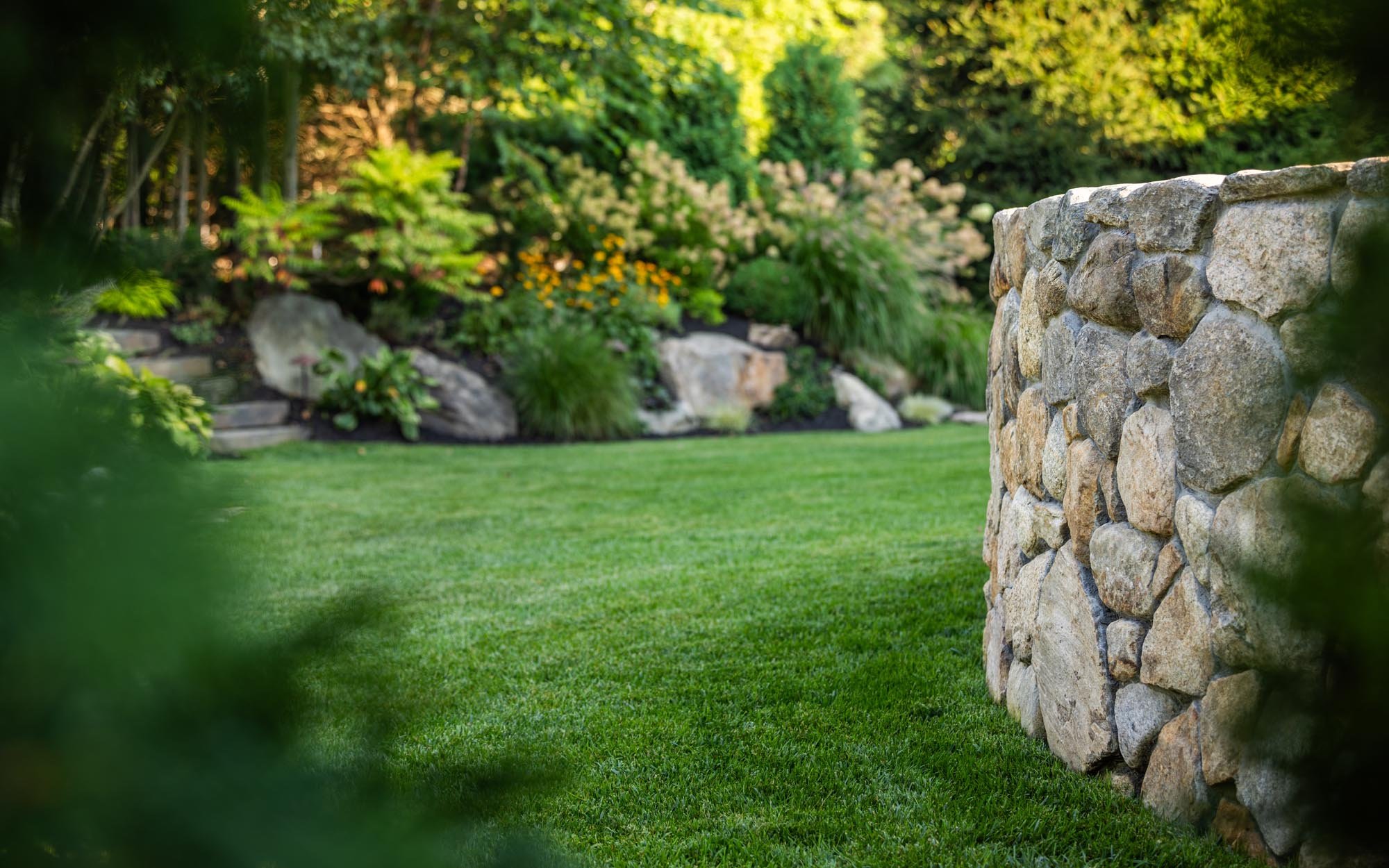
Every element described here — water, stone, kitchen, wellness, fire, gathering — only works when understood in relation to the others and to the home and land. Decisions made in isolation lead to landscapes that accumulate without cohesion.
Every project begins with the property as a whole. Every element that follows responds to that understanding.
The goal is a landscape that supports how a family lives — across seasons, over time, and without effort. We work with residential clients seeking a luxury landscape architect across eastern Massachusetts and coastal New England — from MetroWest and Greater Boston to the South Shore and beyond.
Not a collection of elements — a complete landscape.
SELECTED WORK