
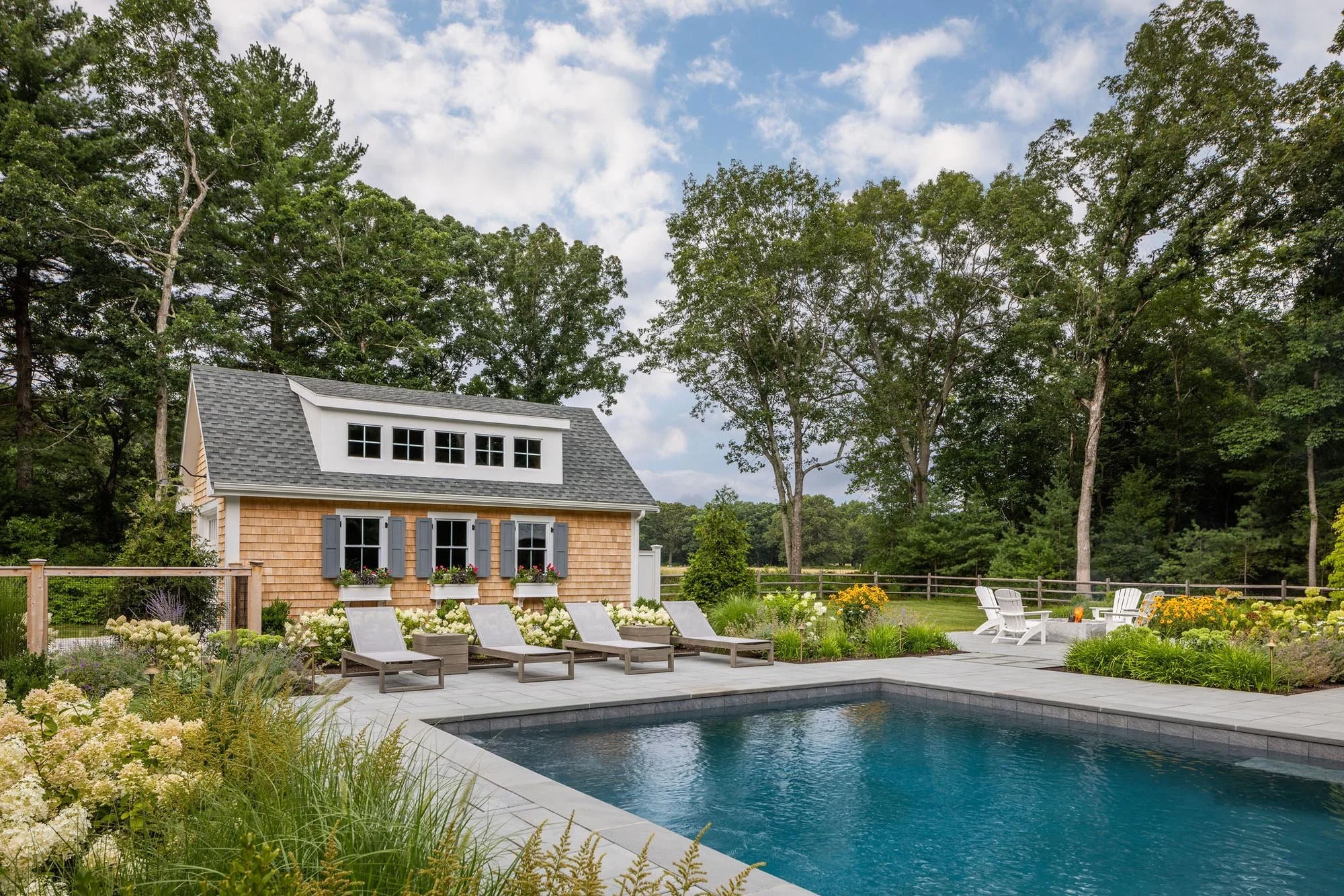
DOVER, MASSACHUSETTS
Pastoral Elegance
Open land shaped to read as continuous with the property — structure without interruption.
LOCATION
Dover, Massachusetts
PROJECT TYPE
Residential Landscape
Design + Build
MORE PROJECTS
OVERVIEW
A family on a generous Dover property wanted a landscape that belonged to the open, pastoral character of the town — not a designed garden imposed on the land, but an environment that felt as though it had grown from it.
Dover's open land character — rolling topography, mature trees, generous lot sizes, a tradition of equestrian and agricultural use — set the tone for what the design needed to achieve. The property sat within that landscape but had never been shaped to participate in it.
The central question became: how do you introduce structure, function, and refinement into a large open property without the result feeling imposed or out of place in its surroundings?
THE LAND
The site is defined by a gently rolling open lawn, mature specimen trees at the perimeter, and long views across the property and toward neighbouring land. The scale of the lot required that designed elements feel proportional to the openness — small gestures would be lost, over-scaled interventions would dominate.
The existing trees became the anchoring elements of the composition — not obstacles to work around, but fixed points from which the design extended outward.
THE DESIGN
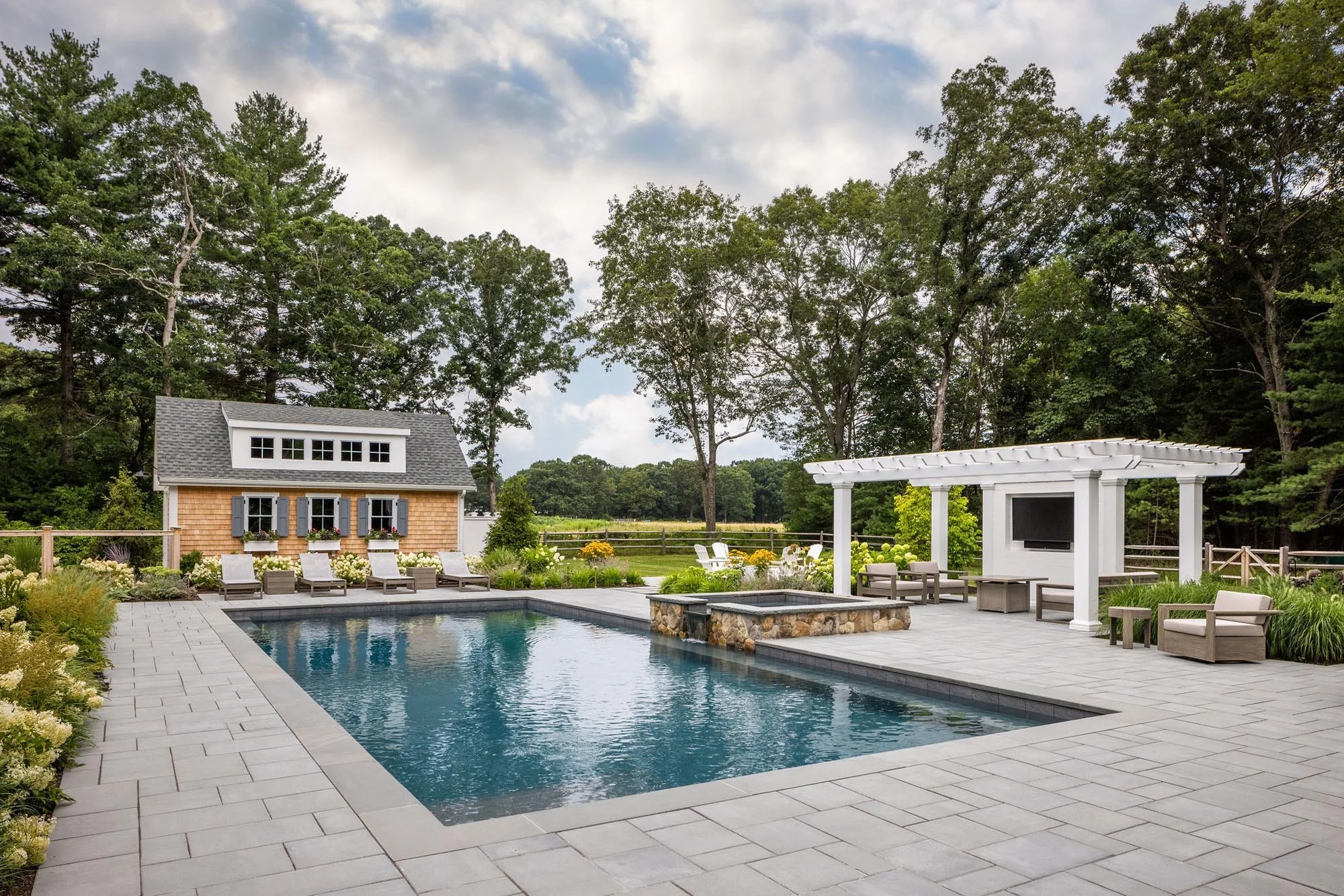
The landscape is organised around the home and the open lawn beyond it — creating a clear hierarchy from the intimate spaces nearest the house to the open pastoral landscape further out. Stone terracing near the home provides structure and definition. As the design moves away from the house, the language softens — meadow planting, mown grass paths, naturalistic edges — so that the designed portion dissolves gradually into the wider property.
The goal was not a hard edge between designed and natural, but a transition so gradual it is felt rather than seen.
KEY ELEMENTS
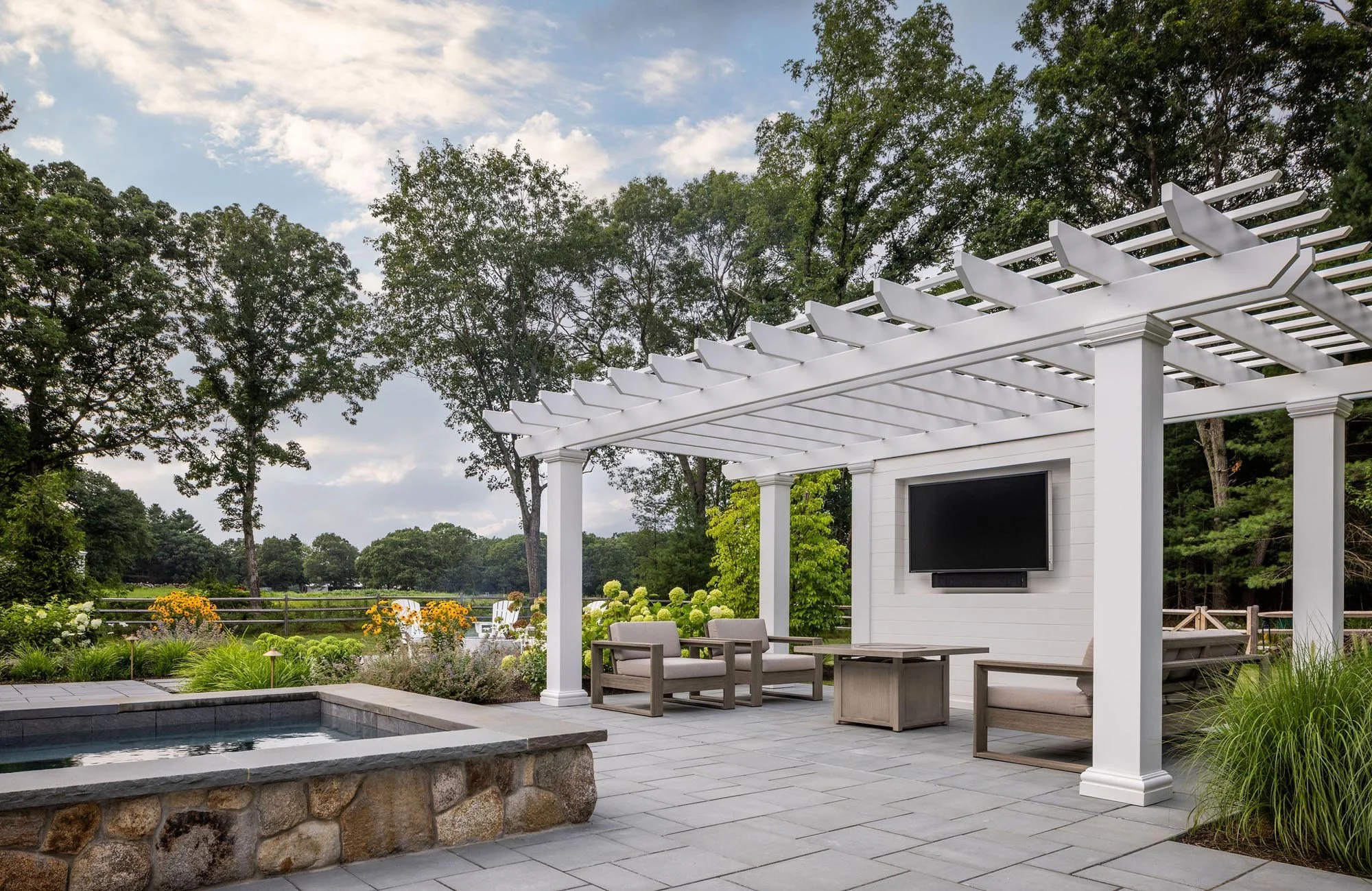
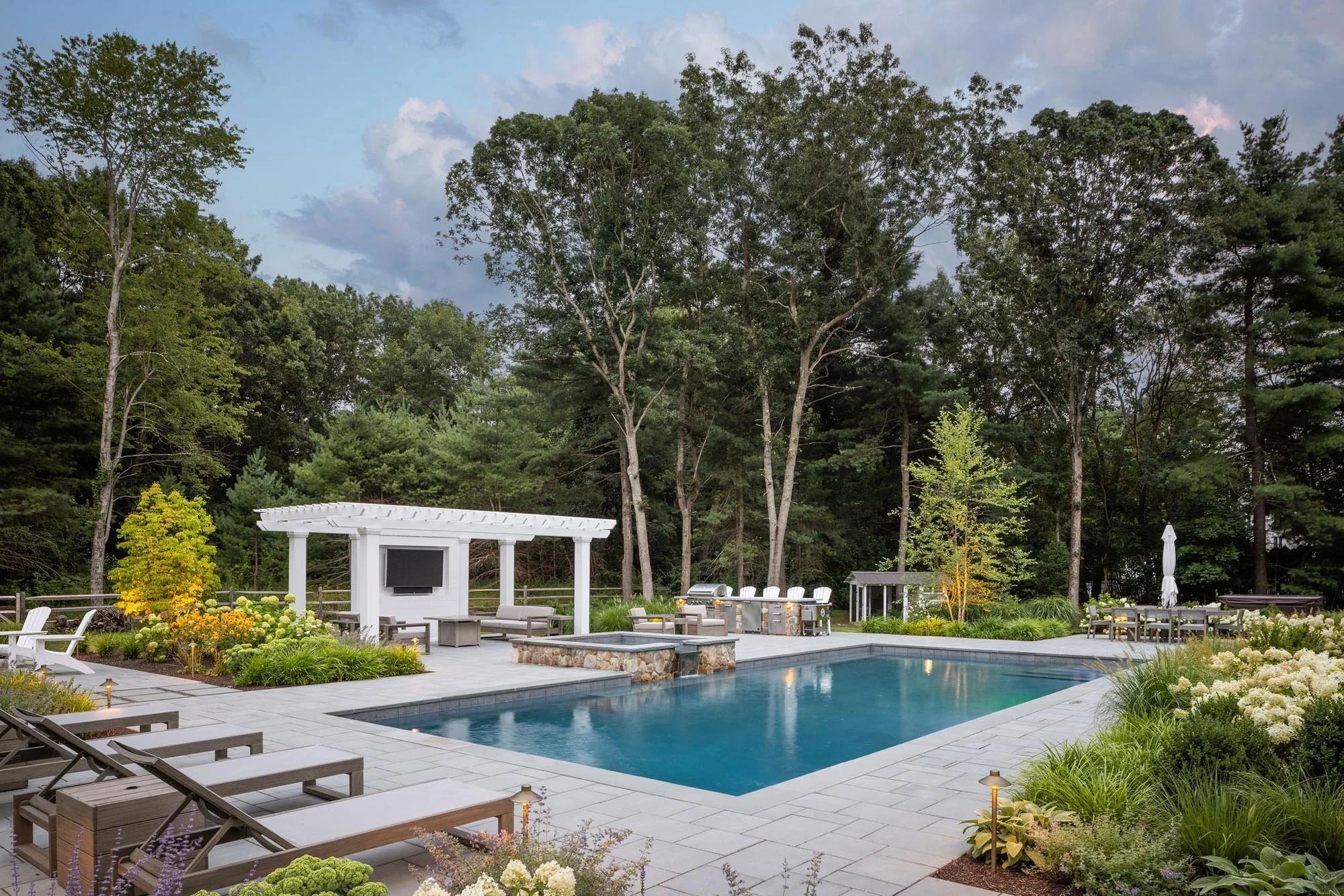
Fieldstone terracing near the home — material selected for its relationship to New England's agricultural heritage and the pastoral character of the site
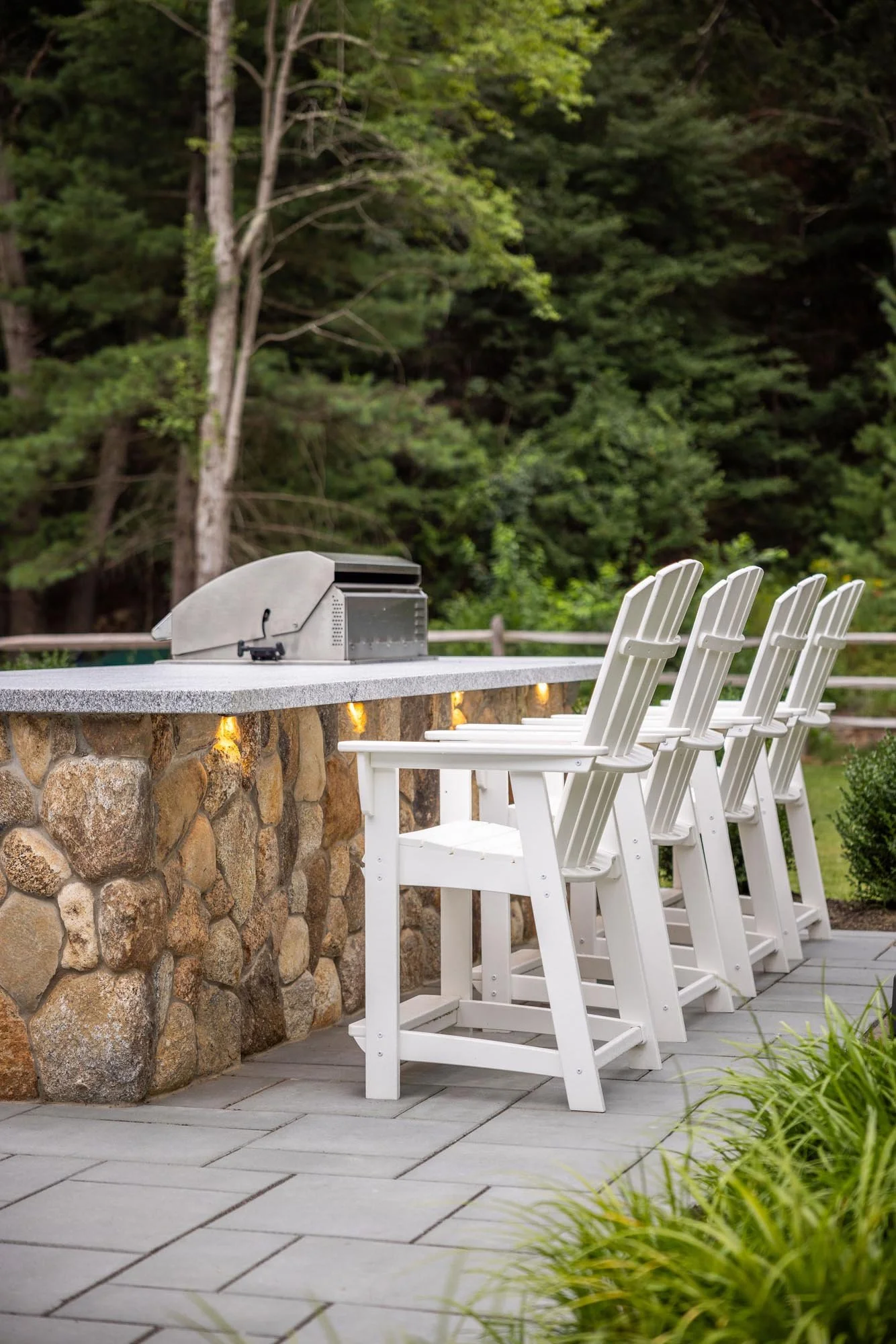
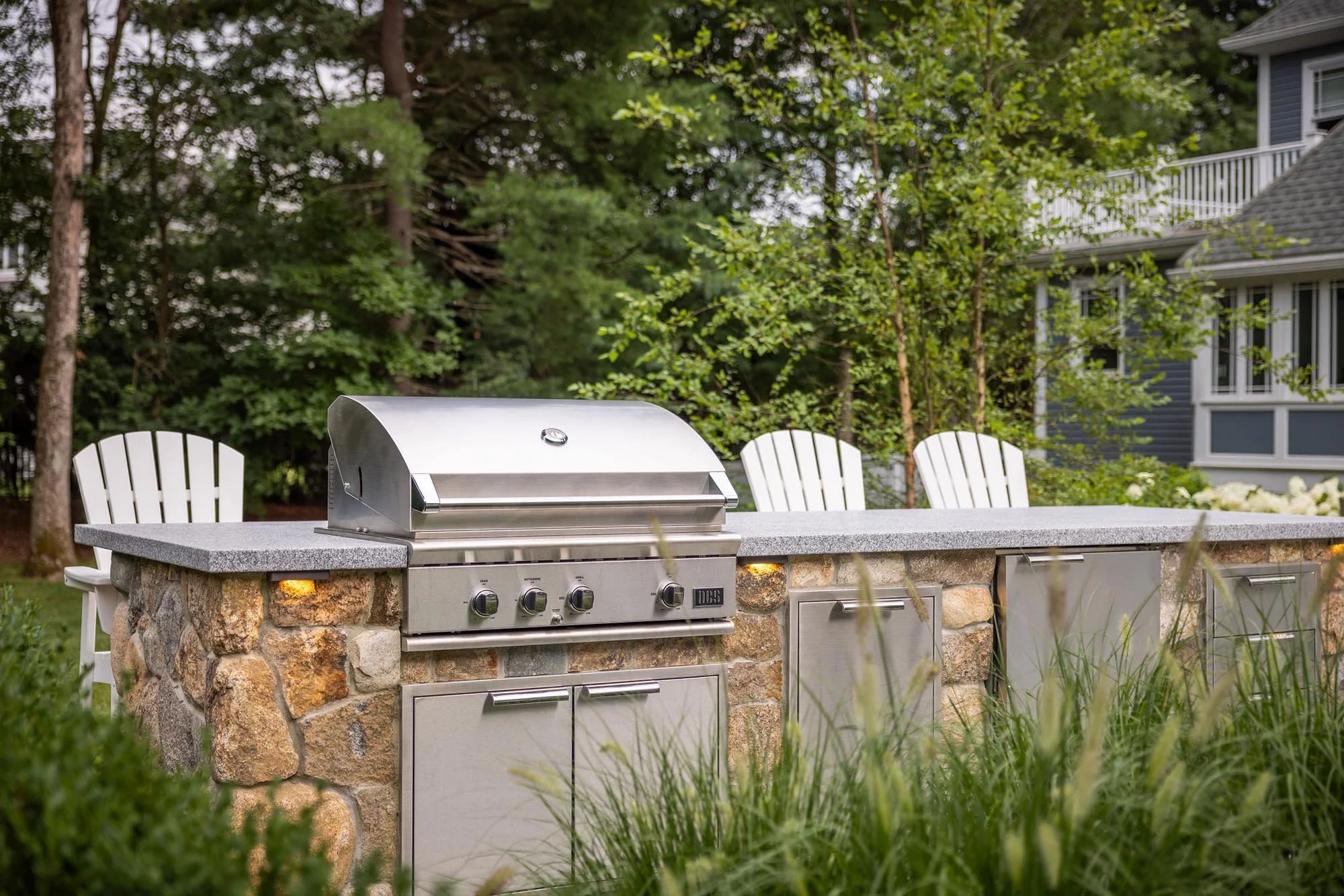
Outdoor kitchen and dining tucked into a sheltered alcove — functional and refined without interrupting the open landscape beyond
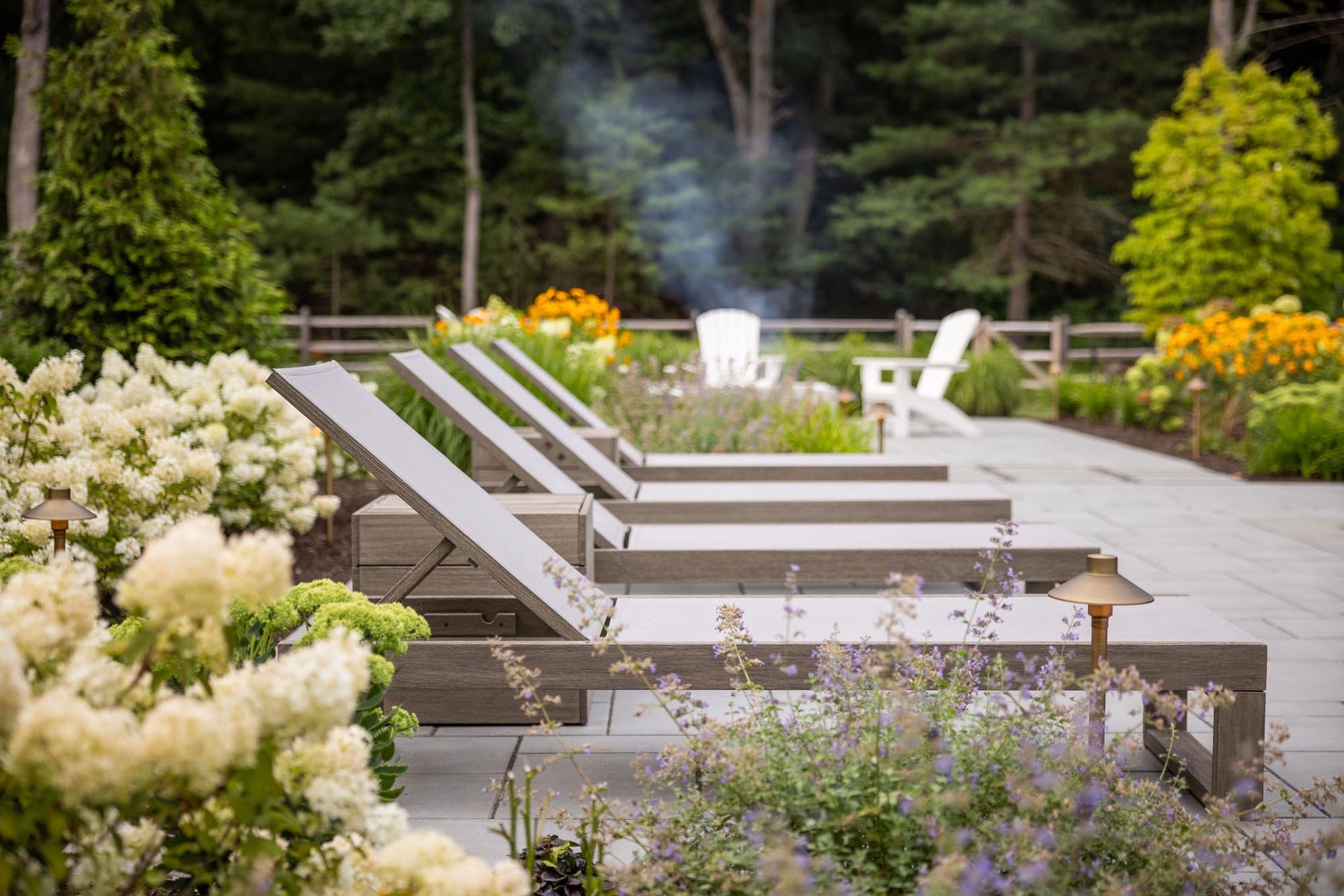
Meadow planting in the transition zones — grasses and native perennials that move with the wind, soften the designed edge, and provide seasonal variation
MATERIALS & CRAFT
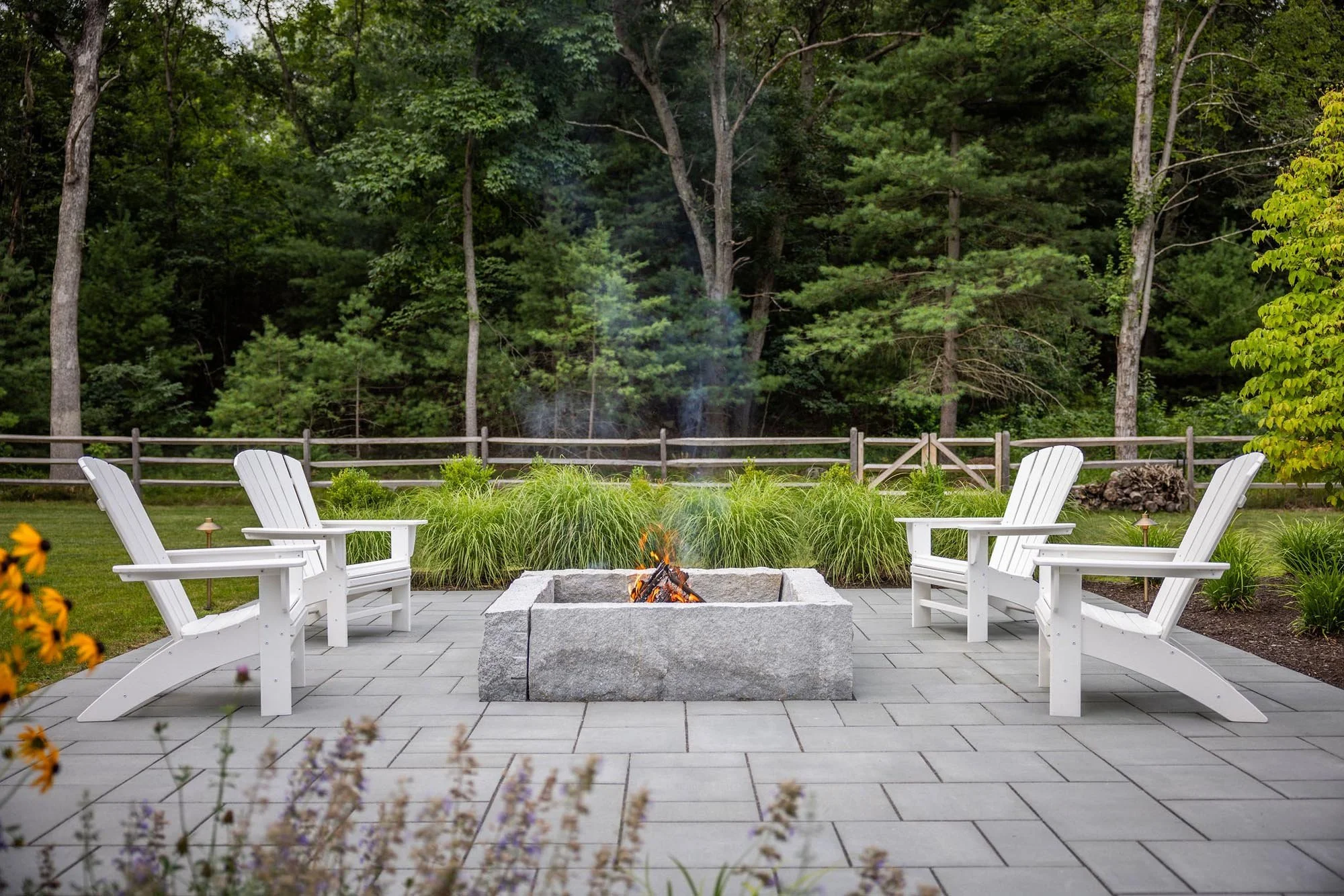
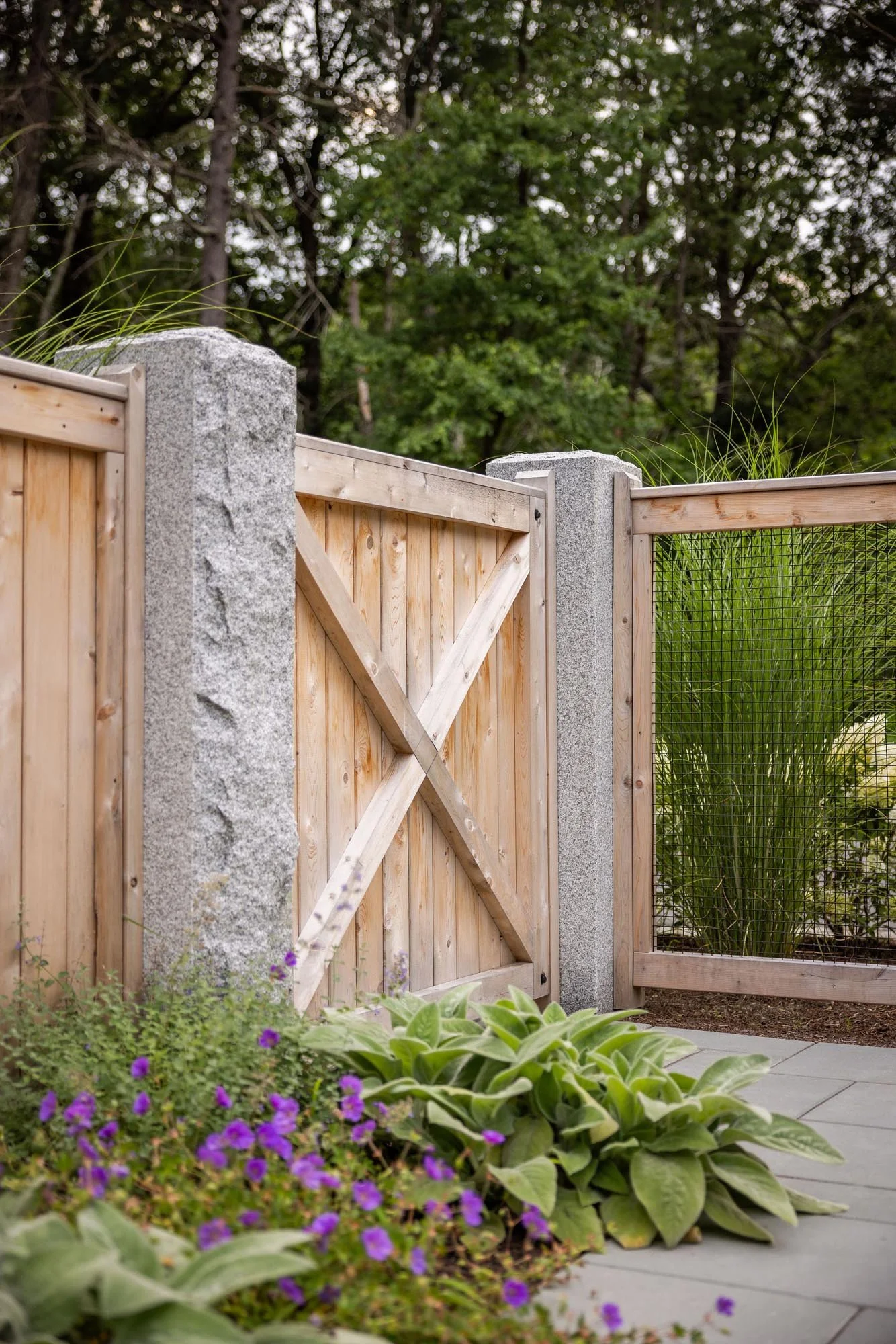
Fieldstone was the primary structural material — sourced for its local character and laid in a manner consistent with the dry-stone wall tradition of MetroWest Massachusetts. Over time, moss and weathering will deepen its connection to the site. Stone edges were kept informal rather than precisely cut, reinforcing the pastoral register of the design.
Planting was selected for multi-season presence — structure in winter, bloom in spring, movement in summer, colour in autumn — so the property reads well across the full year.
LIVING IN THE SPACE
Morning walks across the lawn have become part of the family's daily routine. The terrace is used for dinner several evenings a week through the warm season. The meadow areas attract pollinators through summer and hold their structure well into winter, providing visual interest from the home when the property is otherwise dormant.
The property feels larger than it is — because the designed portion makes room for the open landscape rather than competing with it.
“We are incredibly happy with how everything turned out! Thanks for your creative vision and for all your team’s hard work managing the project from start to finish. We are blown away!”
A landscape shaped to belong to its surroundings — refined in detail, open in character, continuous with the land beyond.